
April is Stress Awareness Month, but for startup founders and entrepreneurs everywhere, stress tends to be something they’re aware of regardless of the calendar.
From navigating uncertainty to making high-stakes decisions, founders across Winston-Salem and the greater Piedmont Triad are building businesses in environments that demand resilience daily.
While some may argue that stress fuels growth, it’s important to remember negative stress can also slowly shrink or remove it completely. The challenge for business owners is learning the difference before burnout takes over.
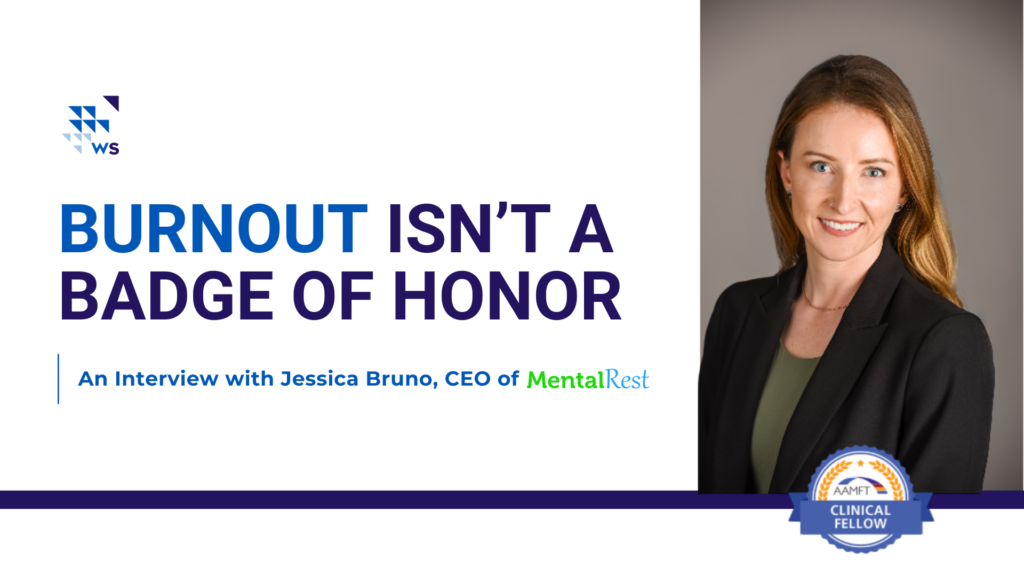
We sat down with one of our Winston Starts Founder, Jessica Bruno, Clinical Director of MentalRest to unpack stress patterns in entrepreneurship and how founders can better support their mental health while building something meaningful.
The Two Types of Stress Every Startup Founder Needs to Recognize
Not all stress is harmful in entrepreneurship, some of it is actually completely necessary and often plays a critical role to the process of launching a company.
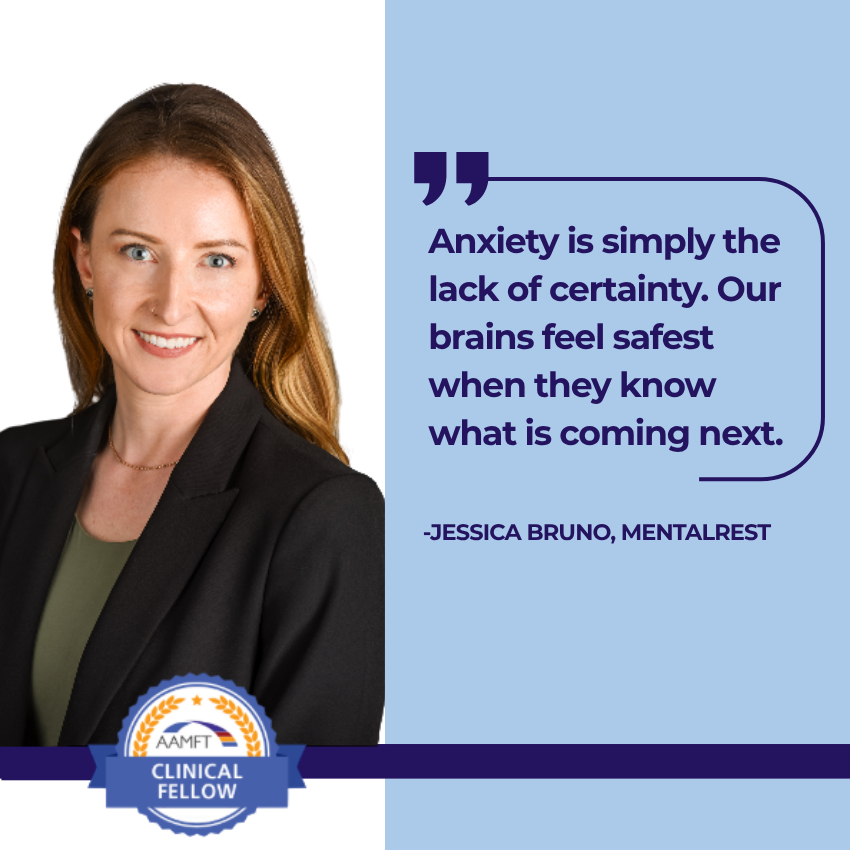
“I often explain to my clients that anxiety is simply the lack of certainty. Our brains feel safest when they know what is coming next,” Jessica shared, being overly familiar with just how rare certainty is for founders like herself.
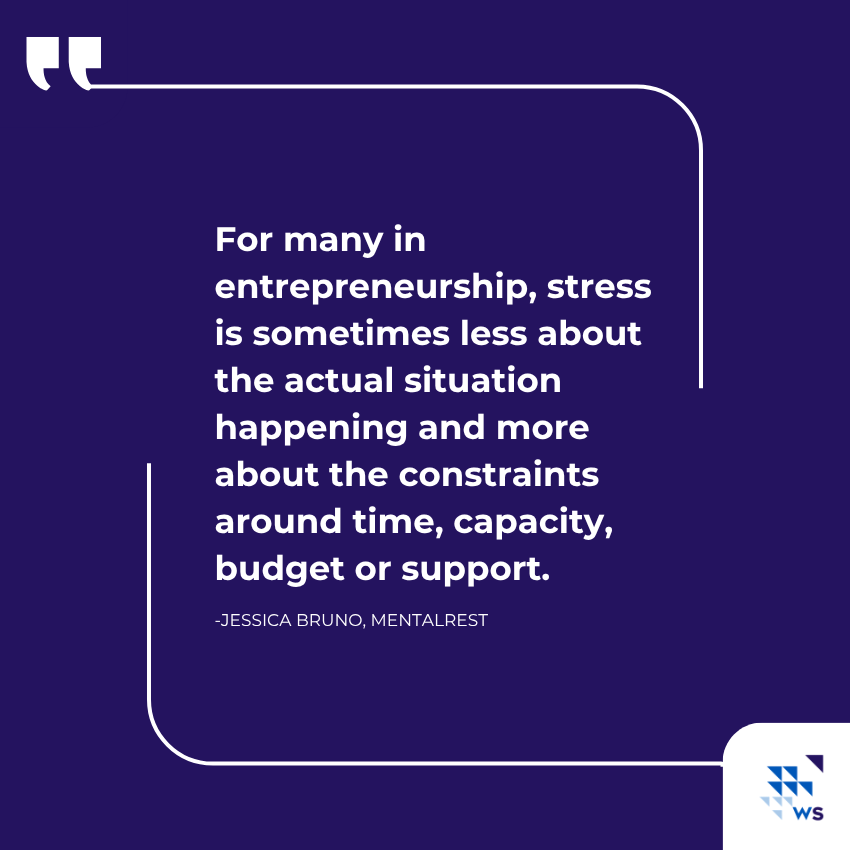
“Each day brings new variables, surprises, and unexpected challenges. We usually recognize motivating stress because it feels energizing, focused, and tied to growth—it’s the kind of stress that led us to start our companies to begin with.”
This is the positive stress that drives innovation across startups, but the other kind is what quietly wears entrepreneurs down over time.
Jessica validated that the kind of stress that wears us down is fundamentally different. “To reduce it, we need to lower uncertainty wherever we can. Sometimes that starts with a simple question: What is the worst thing that could happen if I do not get this done? More often than we expect, the answer does not match the emotional meltdown happening in our minds.”
In the mental health field, this is referred to as catastrophizing.
“If you notice yourself thinking, ‘Everything is going to fall apart, and my company is going to fail!’ Jessica says to take a pause and ask yourself, ‘what is actually most likely to happen?’
Even in challenging scenarios like missing out on critical funding or having tough conversations, founders always have options outside of letting the stress or panic takeover.
“You may need to pursue another source of funding, delay a project, or have a difficult conversation with your team. Could you gather more information? Remove something from your calendar? Talk to a mentor or expert?”
How Entrepreneurs Can Navigate High-Stakes Moments
Whether it’s an intimidating Investor meeting, uncomfortable team challenge or a major pipeline problem, high pressure moments are unavoidable for startups.
Jessica sees most founders instinctively try to hide their stress and therefore witness how that approach usually backfires.
“Be honest about how you’re feeling.”
Jessica once attended a workshop led by a renowned clinical psychologist and author where her perspective shifted. “He seemed incredibly confident, so when he started out his talk by apologizing and admitting that he was a little bit nervous, it just blew me away. Somehow his admission just made him more likeable and relatable.”
This level of transparency can strengthen leadership.
“If you are feeling overwhelmed before a high-stakes moment, you might say something like:
‘Thank you all for being here today. I’m so excited to present…sometimes when I’m nervous I’ll talk a little too fast, so if I do, please just let me know.’
If there’s an internal challenge perhaps something like, ‘I’ll be honest with you, this is a huge problem…I can’t promise you a perfect solution, but I promise to do my best.’”
Fellow Winston Starts founders, Samantha Dilmore of LYVZ and Amy Dunlap of Stemz, recently shared their own journeys navigating the uncertainty and stress of entrepreneurship—echoing this same truth: sometimes the most impactful move a founder can make in a high-pressure moment is simply taking a step back.
Founders Know the Real Loneliness Epidemic is in Entrepreneurship
On the outside, entrepreneurship can seem incredibly collaborative but behind the scenes it’s more isolating than most realize.
“Loneliness is incredibly common in entrepreneurship, and so is hesitation about asking for help.” This is especially true for founders leading teams. “I think about anxiety as a tangled knot of thoughts—messy, confusing, and hard to separate. But when we talk about those thoughts, they start to take shape.”
Most of us can remember a time when we vented to someone and felt better afterward, even if the other person never solved the problem. Sometimes just getting it out is what makes us feel better.”
For entrepreneurs in the Triad and beyond, building a support system is essential…but not always easy.
“A common caveat is that we don’t always want to talk about our problems to our friends, family or team members but there are excellent alternatives! In my experience being a founder at Winston Starts, having mentors I can rely on, confide in and help guide me in those high stress moments have been a game changer. And of course, therapy is also an incredible alternative. A great therapist doesn’t have to be a subject matter expert to help you work through the problem you are dealing with.”
Supporting Founder Mental Health in Winston-Salem and Beyond
There’s one pattern many startup founders fall into Jessica pointed out, and that’s telling themselves, they will relax ONE DAY.
After the next milestone.
After funding closes.
After things “settle down.”
But how often does that moment actually arrive?
“The cure can’t be worse than the disease. You have to ask yourself, ‘What exactly in my life is going to change if I am successful?’” The shift isn’t about lowering ambition, but building sustainability into the process.
“There is usually some version of balance you can begin practicing now.” Maybe this looks like protecting time with family, finding a trusted mentor, staying consistent with your physical and mental health, creating space outside the business, or reaching out for support when you need it.
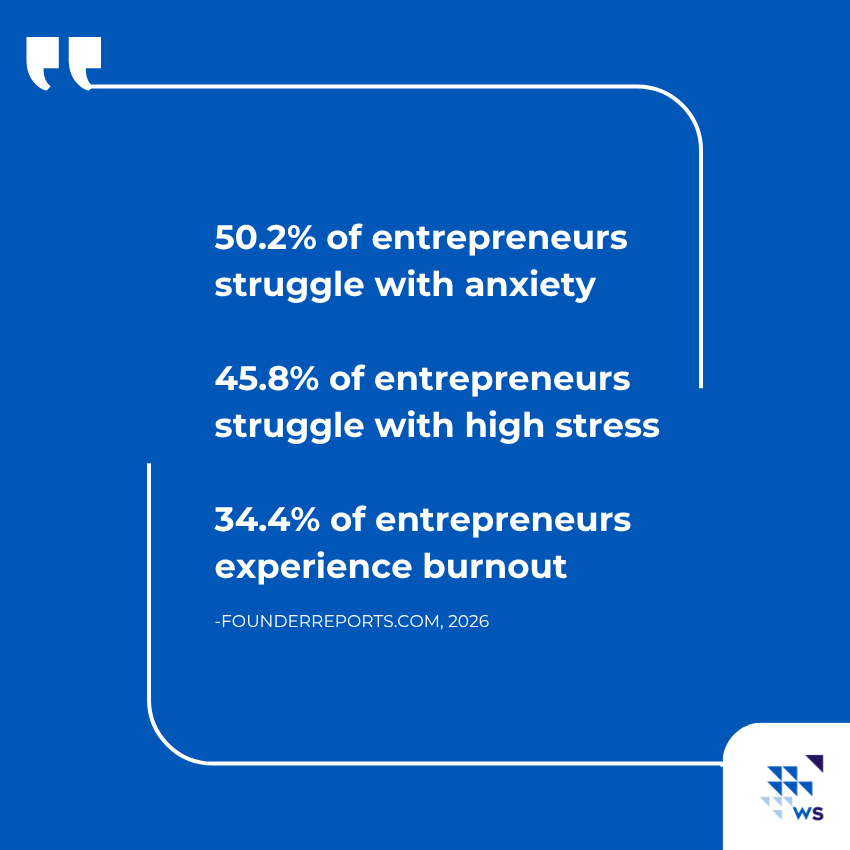
Stress is always going to be a constant in entrepreneurship, but burnout doesn’t have to be. For startup founders at Winston Starts, throughout the Piedmont Triad and beyond, prioritizing mental health is a crucial part of building a business that lasts.
If you’re interested in learning more about the work Jessica Bruno and her team does at MentalRest to support entrepreneurs navigating stress, anxiety, and life transitions checkout the website here.