
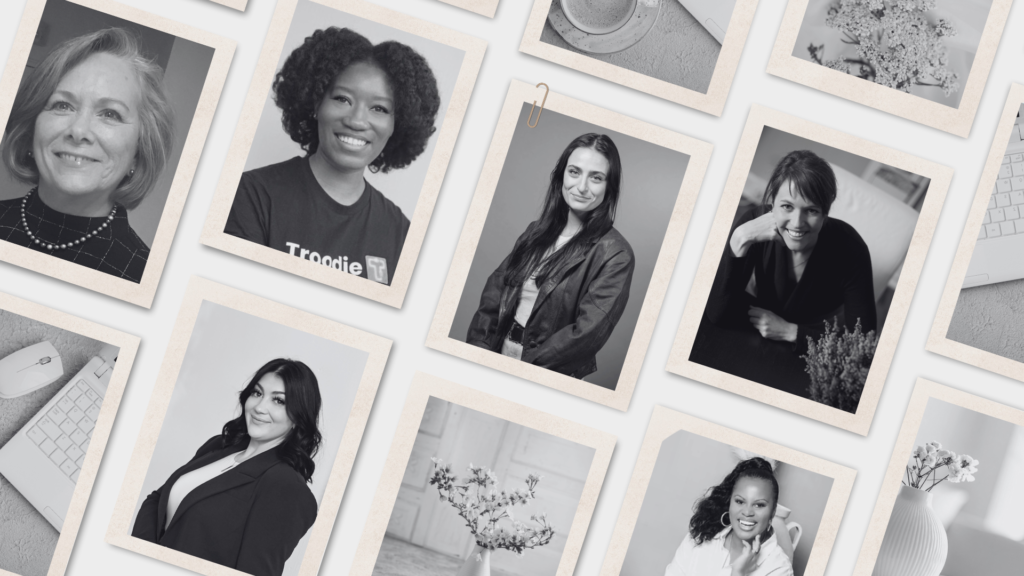
In honor of International Women’s Day and Women’s History Month, we’re shining a light on the women building bold ideas into real, measurable impact.
Across Winston-Salem, the Triad, and North Carolina, these founders are shaping the future of innovation; not just through the companies they lead, but through the resilience, clarity, and confidence they’ve cultivated along the way.
At Winston Starts, we have the privilege of working alongside leaders who represent a wide spectrum of industries, lived experiences, and ambitions with more than half of our community reflecting voices that have historically been underrepresented in high-growth entrepreneurship.
Our female founders are building scalable solutions to urgent challenges from industries in healthcare and tech to education, consumer goods, and beyond— while redefining what leadership looks like in the process.
This month we’ve interviewed a handful of these incredible founders to invite you to get to know who they are, how they’ve grown, and the identity shifts that happen when women decide not just to start something, but to lead it.
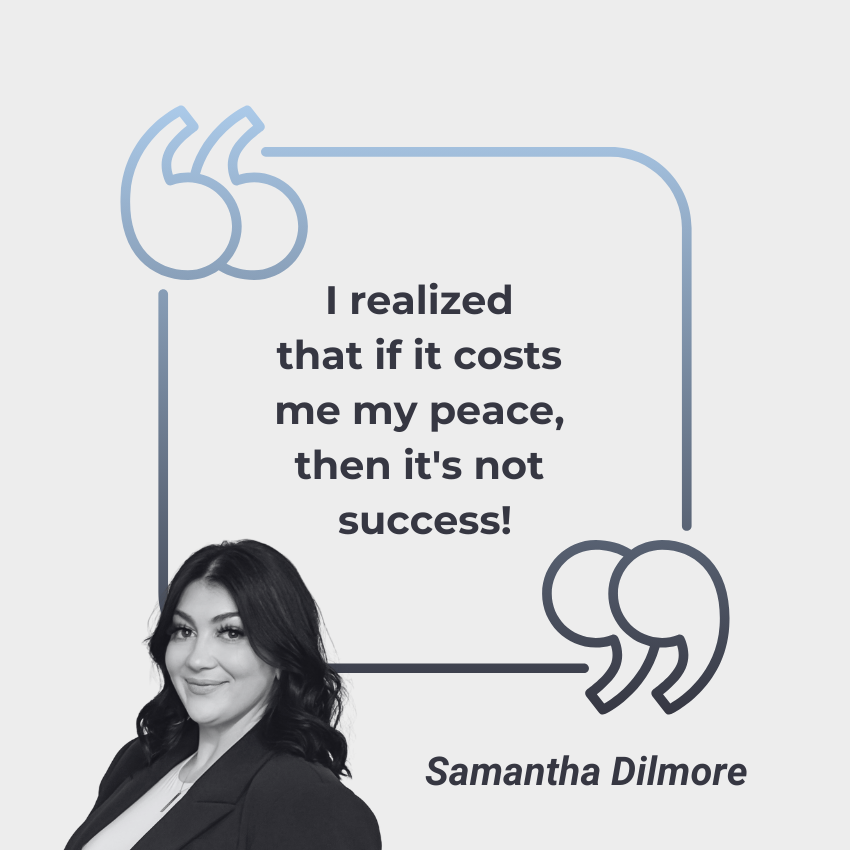
Samantha Dilmore
Founder, LYVZ
How have you redefined success on your own terms?
“Success used to mean doing more and proving myself. Now it means building something I’m proud of while being present and grounded. If it costs me my peace, then it’s not success!”
If your younger self could see what you’re building, what would she be most proud of?
“I love this question! She’d be proud that I turned an idea with my husband, into something real. Something that helps people feel better in their everyday lives and honestly, that I had the courage to put my name behind it!
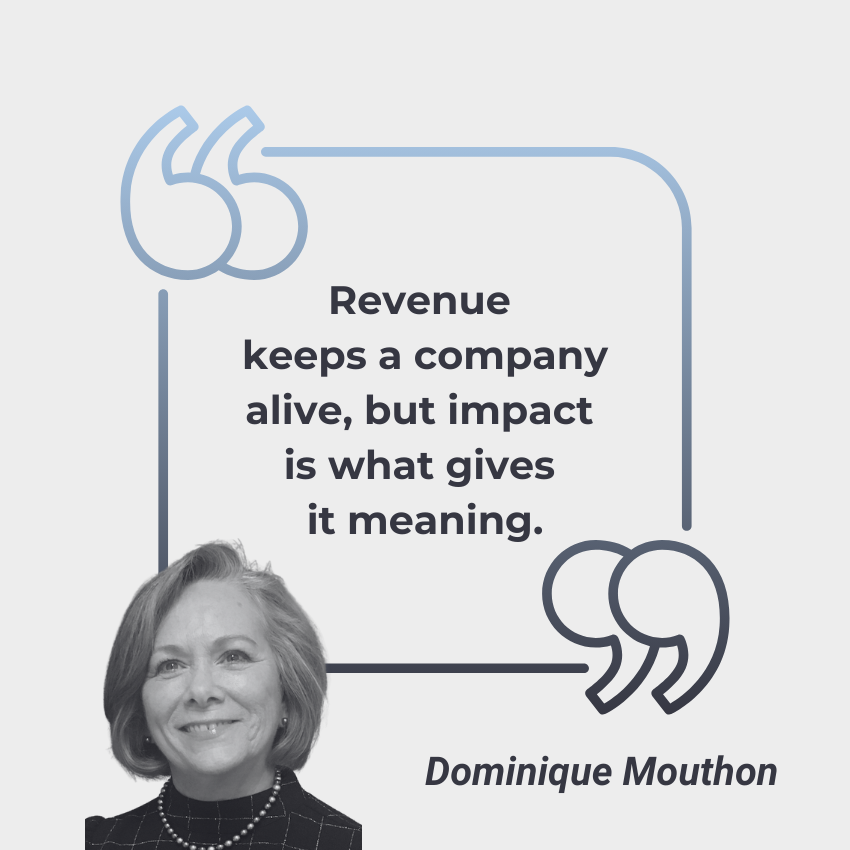
Dominique Mouthon
Founder, Clever Education Solutions
What impact do you hope your work has beyond revenue?
“Revenue keeps a company alive, but impact is what gives it meaning. After decades in Montessori education, I’ve seen how easily mission-driven schools can burn out the very people who care the most. My work is about protecting those people. I want leaders to feel less alone. I want schools to be sustainable. I want strong systems to be seen as acts of dignity, not bureaucracy. If the work we build helps even one school preserve its mission and its people, that’s the impact that matters. Sustainability and dignity are the legacy.”
What decision felt terrifying at the time, but ultimately changed the trajectory of your company?
“Starting the company at 60! After decades in education, I could have stayed in familiar territory: consulting, mentoring, serving on boards. Instead, my husband and I chose to build a software company from scratch in an industry that doesn’t always welcome newcomers- especially not women who don’t come from tech.
It was terrifying. We were stepping into a completely different language, a different pace, a different risk profile. But it changed everything. It forced me to think bigger; to translate educational values into systems; to learn how to build something scalable without losing soul. That decision didn’t just change the trajectory of the company. It changed mine.”
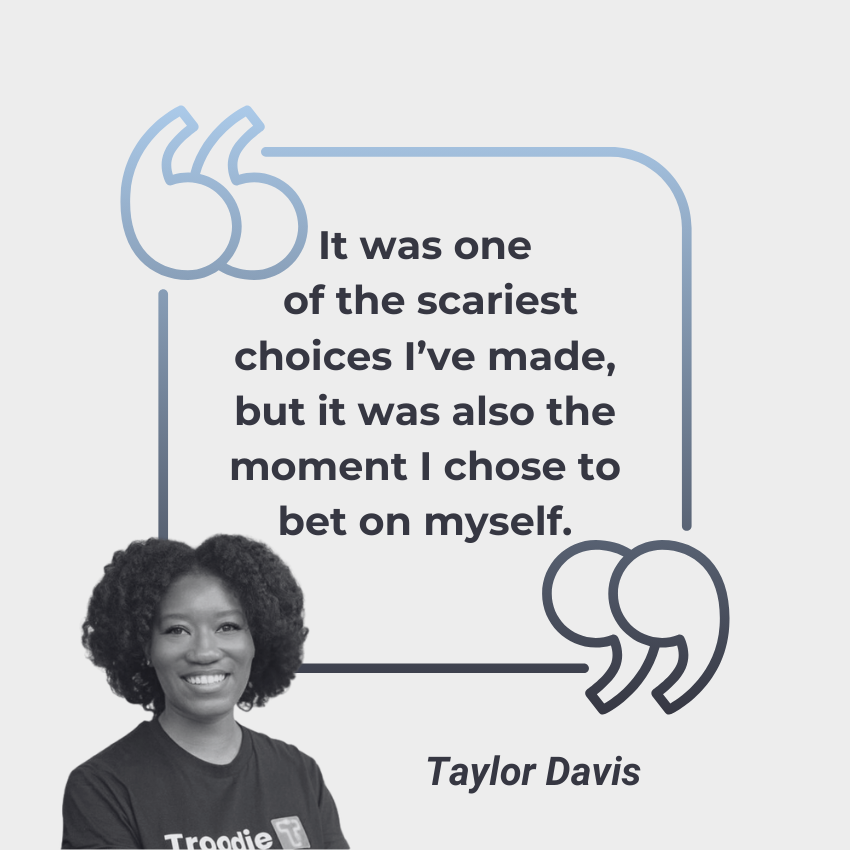
Taylor Davis
Founder, Troodie
What part of your journey has stretched you the most and how did you grow because of it?
“Definitely sales! Getting out there and asking customers for money has been no small feat. Early on, I found myself offering free trials before I had the courage to lead with paid pilots. Over time, I’ve grown in learning how to clearly communicate my customers’ problems and show them exactly how Troodie drives value for their business.
I’ve been on a crash course in B2B sales and suddenly all other aspects of the business seem easy in comparison! An exited female founder told me that once she mastered sales, she felt unstoppable in every area of her life and was able to ask and advocate for herself for anything, from business to fundraising to personal growth. I am starting to understand what she meant!”
What decision felt terrifying at the time, but ultimately changed the trajectory of your company?
“Deciding to leave my full-time role as an investment banker, move out of my NYC apartment, and back home was a huge choice, but I knew that I’d never be able to carve out the time to build and scale Troodie while working 80+ hours per week.
It was a leap into uncertainty, but it gave me the space to commit fully to what I was building. My background in finance has still been invaluable when it comes to positioning, pitching, and building a strong foundation for the business. It was one of the scariest choices I’ve made, but it was also the moment I chose to bet on myself and now Troodie is here and thriving.”
Julia Harrison
Founder, Farm Trader
What impact do you hope your work has beyond revenue?
“Beyond revenue, I want my work to expand opportunities for farmers who are often overlooked or underrepresented in traditional markets. As a woman founder in agriculture, I understand what it feels like to step into spaces where your voice is not always the loudest in the room.
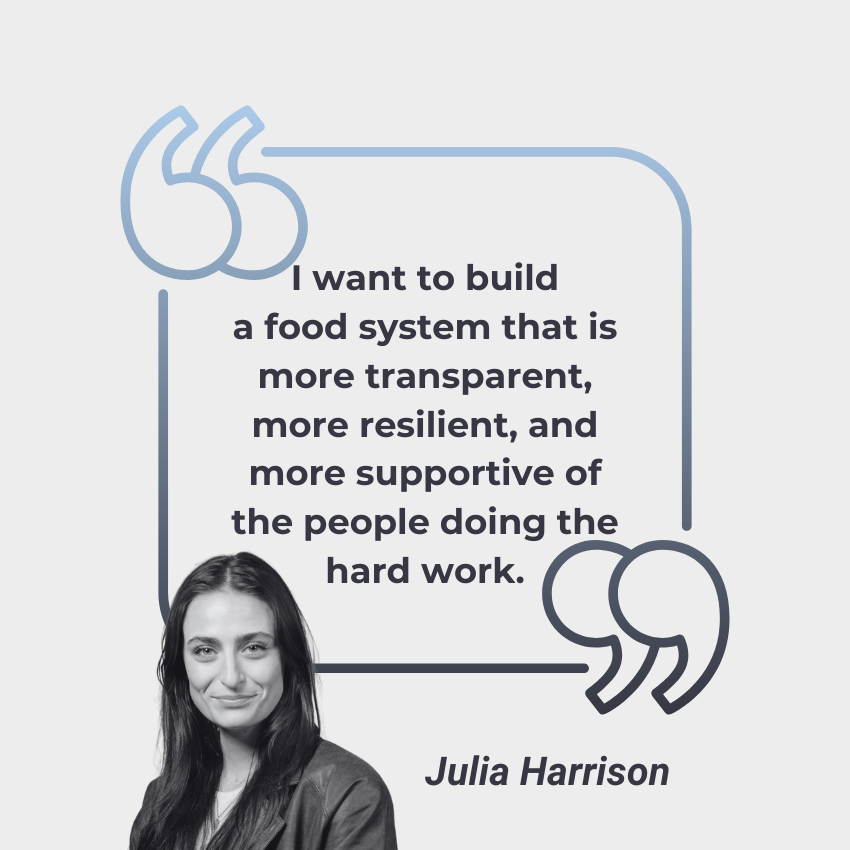
I hope our work gives farmers more visibility, more control over how they sell, and more confidence in the sustainability of their businesses. When producers can access better markets and connect directly with buyers, they strengthen not only their own operations but also their families and rural communities. I want to help build a food system that is more transparent, more resilient, and more supportive of the people doing the hard work of growing our food.
If we can create infrastructure that allows independent farms to thrive for generations, that is the real measure of success.”
If your younger self could see what you’re building, what would she be most proud of?
“My younger self would be proud that I chose to build something rooted in what shaped me. Agriculture was not just an industry in our household…It was part of our daily life, our values, and shaped the way we understood hard work and community. To be building something that supports farmers alongside my brother, would mean everything to her.
Most of all, she would be proud that I am not just building a business, but building impact. That I chose passion over comfort. And that I am working with family while helping shape the future of farming.”
Q. Nicole Vanderhorst
Founder, WH Farms Co.
What’s a win that outsiders might overlook—but meant everything to you?
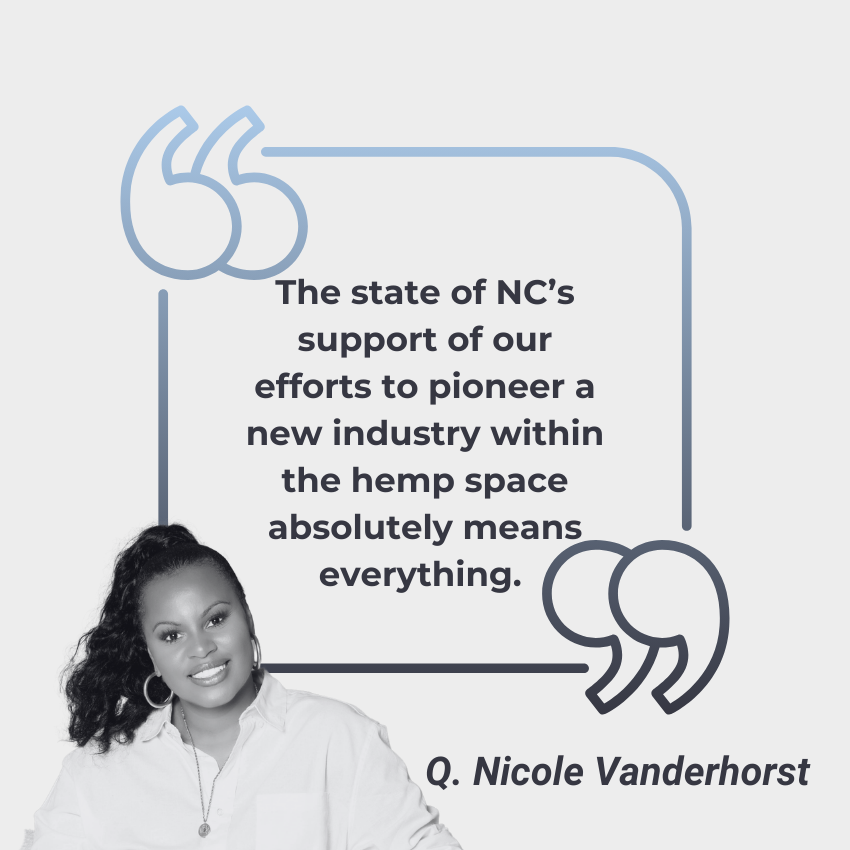
“The state of North Carolina’s support of our efforts to pioneer a new industry within the hemp space absolutely means everything. Receiving a grant from both the Dept. of Agriculture and the Dept. of Commerce really validated our business model and its positive economic impact in our state.”
We often talk about the journey to success, but what is something personal you’ve had to put on the back burner to get your company to this stage?
“I sacrificed 5 years without a salary during a season of life where most of my friends are enjoying the fruit of their labor. I don’t have any regrets, however.”
Amy Dunlap
Founder, Stemz
If your younger self could see what you’re building, what would she be most proud of?
“If my younger self could see me now, I think she’d be most proud of how comfortable I’ve become using my voice. I was shy growing up and I hated talking in class. My heart would race if I had to raise my hand or present in front of people. And now? I genuinely enjoy it.
Whether it’s speaking to an entrepreneurship class, pitching investors, leading a farm partner meeting, or telling the story of what we’re building…I don’t just tolerate it, I look forward to it. It feels like alignment instead of fear.
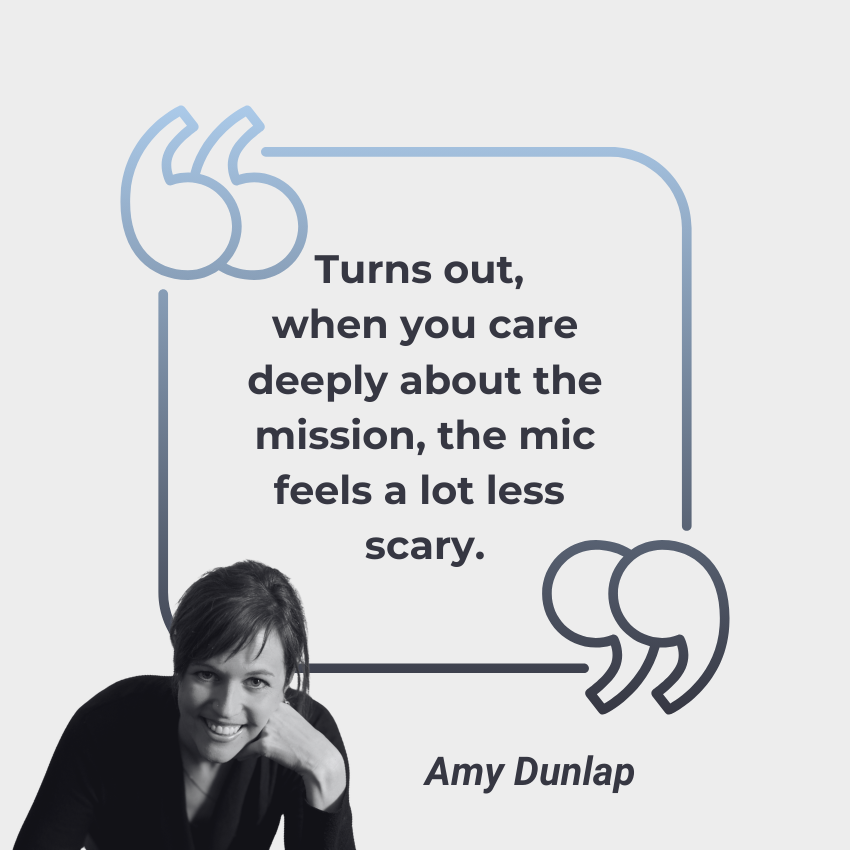
I think my younger self would be proud that I didn’t let “quiet” define my ceiling. That I built confidence through experience, not personality. I learned you don’t have to be the loudest person in the room to lead, you just have to believe in what you’re saying. Turns out, when you care deeply about the mission, the mic feels a lot less scary.”
What impact do you hope your work has beyond revenue?
“Beyond revenue, the impact I hope for is simple: I want flower farms to be profitable, not just passionate. Not just surviving—Profitable. Flower farming is hard…weather risk, labor intensity, thin margins. If we can help farms sell consistently, plan with real demand data, and get paid reliably, that’s real impact.”
These women are paving new paths, reshaping what innovation looks like for the next generation of founders through their personal and professional growth.
We hope you enjoyed getting a close up view of the way these founders are redefining leadership on their own terms, building companies that reflect both ambition and empathy, and creating solutions while navigating identity shifts that rarely make it into the pitch deck.
To learn more about these incredible founders and the companies they’re building, click on their company name and explore the work they are doing in our community.