
Six months into the year? It might be time for your Startup to press the reset button…and that’s a good thing.
January has a way of making everything feel possible. You set new goals, challenges feel exciting, there is fresh momentum, ambitious projections and a plan.
Then reality happens…
Markets shift. Funding falls through. Customers surprise you. Priorities change. Suddenly there are things that the you-from-six-months-ago didn’t know and now the strategy you started with doesn’t feel right anymore.
Here’s the good news: that’s perfectly normal.
The most successful founders don’t stick to a plan out of stubbornness but embrace the ability to reassess. They pivot when necessary and recalibrate.
At Winston Starts, we often remind our founders that entrepreneurship isn’t about being right from the beginning—it’s about being willing to learn, adapt, ask for support and make smarter decisions as we learn new information.
A mid-year strategy review isn’t an indication that you’ve failed. It’s an opportunity to make sure you’re still building the right things in the right way for the business.
Flexibility isn’t a Sign of Weak Planning, it’s a Sign of Strong Leadership.
Lauren Colgrove Parker, Director & General Manager of Hanes Women’s at Hanesbrands Inc., believes the best strategies are designed with adaptability in mind.
“I believe a strong strategy allows for room to flex throughout execution. It’s not always a straight line; the business environment is dynamic and unforeseen challenges and obstacles will always occur.”
“Strong leaders and teams allow themselves room to re-evaluate and re-think the end state along the way.”
You aren’t starting over, instead, think of it as strengthening your journey with better information than you had on day one. The destination may stay the same even if the route changes!
You Want to Start by Removing, Not Adding.
Founders often have the instinct to start adding something in their strategy when they start feeling stuck; a new marketing initiative, another resource, a product launch.
But according to Winston Starts mentor Justin W. Strickland, Founder and Managing Principal at Impact Brands, the opposite approach is the answer.
“If I had to double the business using only the people, capital, and tools I already have, what would I stop doing?”
It’s a deceptively simple question but it reveals so much.
“Most companies don’t have a resource problem,” Justin says. “They have a focus problem.”
Over time, complexity naturally creeps into a business in all areas and unfortunately pulls founders in too many different directions.
Justin recommends evaluating three key areas:
- What’s producing the majority of our growth?
- What’s consuming a disproportionate amount of time and attention?
- What would break if we stopped doing it tomorrow?
“The fastest path to better results is often removing distractions rather than adding something new,” he says.
A mid-year reset doesn’t always require a brand-new strategy. Sometimes it requires recommitting to the right strategy and eliminating everything competing with it.
“The companies that win are rarely the ones doing the most things,” Justin says. “They’re the ones doing the most important things consistently for a long time.”
Gather Data Before You Panic About The Plan
When things aren’t going according to plan every founder eventually asks the question, “is the strategy failing or does it simply need more time to succeed?”
Chase Summers, Executive Vice President, Operations at Fluree, is another Winston Starts mentor who has seen over and over again that the answer rarely comes down to simply “time.”
“When reviewing strategy, the core mission is to collect data. Time is just one data point among many.”
Founders have a plethora of information at their fingertips they can’t forget to lean on like conversations with customers and mentors, market research and more.
“Time alone will rarely define whether a strategy is good or bad,” Chase says. “As a founder, it’s crucial to constantly gather data and challenge your assumptions.”
Before making dramatic changes, pause and ask:
- What are my customers telling me?
- What evidence am I seeing?
- What assumptions am I making?
Your Most Valuable Recalibration Tool? Your Customers.
When things aren’t going according to plan every founder eventually asks the question, “is the strategy failing or does it simply need more time to succeed?”
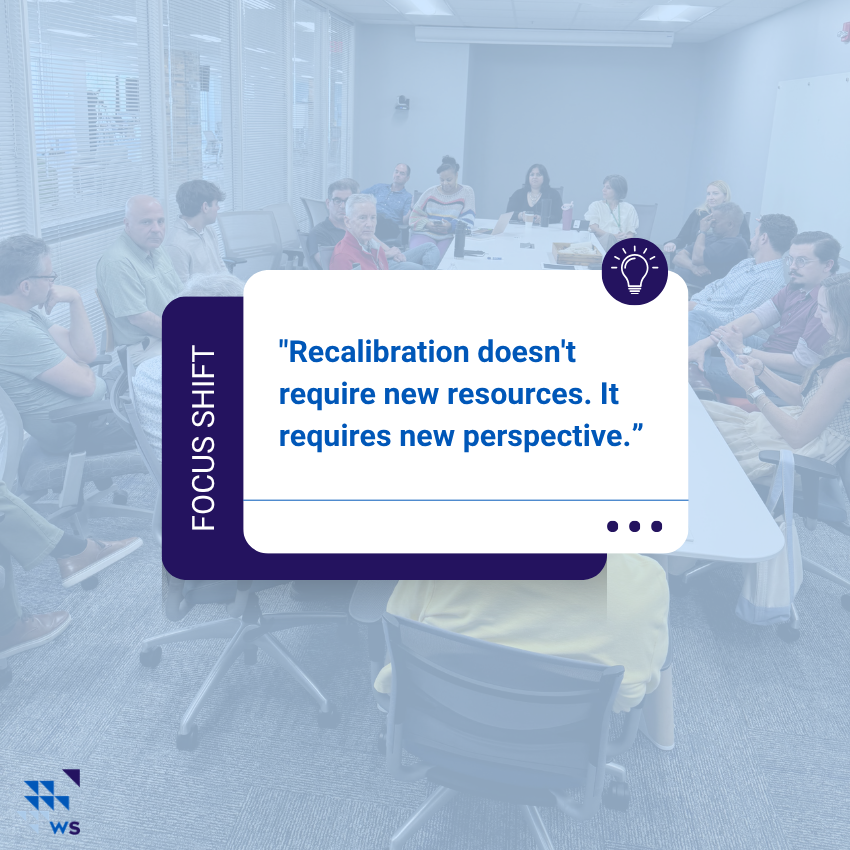
“Recalibration doesn’t require new resources. It requires new perspective,” shared Chase.
And the best place founders can find that perspective? Their customers.
“The single most important and effective way for a founder to spend time is speaking with customers—and really listening.”
Some of his best customers have come from conversations where he wasn’t trying to close a deal at all. He was simply seeking feedback and understanding their needs. “Always be selling” is common business advice, but Chase wants founders to know that it’s far more important to “always be learning.”
What your business needs in this season could be waiting for you within the feedback your customers and market are sharing.
Remember, the strongest founders aren’t the ones who never change direction.
They’re the ones willing to recalibrate with intention, remove distractions, listen closely, and recommit to what matters most. Don’t put your business in a box, but let the course evolve at this mid-year point as you reasses what’s working and what opportunity to shift