
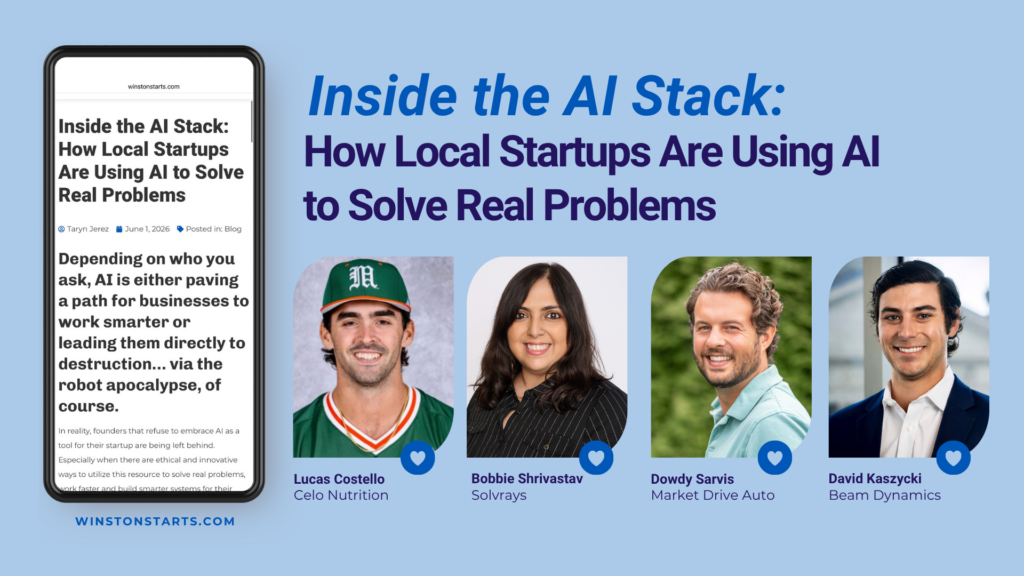
Depending on who you ask, AI is either paving a path for businesses to work smarter or leading them directly to destruction… via the robot apocalypse, of course.
In reality, founders that refuse to embrace AI as a tool for their startup are being left behind. Especially when there are ethical and innovative ways to utilize this resource to solve real problems, work faster and build smarter systems for their startup to increase its impact.
At Winston Starts, founders are using AI in wildly different ways! For some, they’re automating customer communication and organizing massive datasets while others are using it as acting strategic thought partners and operational infrastructure. Our founders aren’t replacing the human touch in their business, but reducing friction so they can focus their energy on creativity and growth.
Here’s an up close look at how a few of our Winston Starts Founders here in Winston-Salem are putting AI to work.
Celo Nutrition: Turning Data Into Better Decisions
For Lucas Costello of Celo Nutrition, AI has become deeply embedded into the day-to-day operations of the business helping his team
“Here at Celo Nutrition, we focus on AI utilization pretty heavily,” Lucas shares. “We use Claude Code by Anthropic to help us organize data and build dashboards. Then we also use ChatGPT to create graphics and concepts.”
In the Consumer Packaged Goods (CPG) world, data can make or break decision-making—and AI is helping simplify a process that traditionally feels overwhelming for many founders.
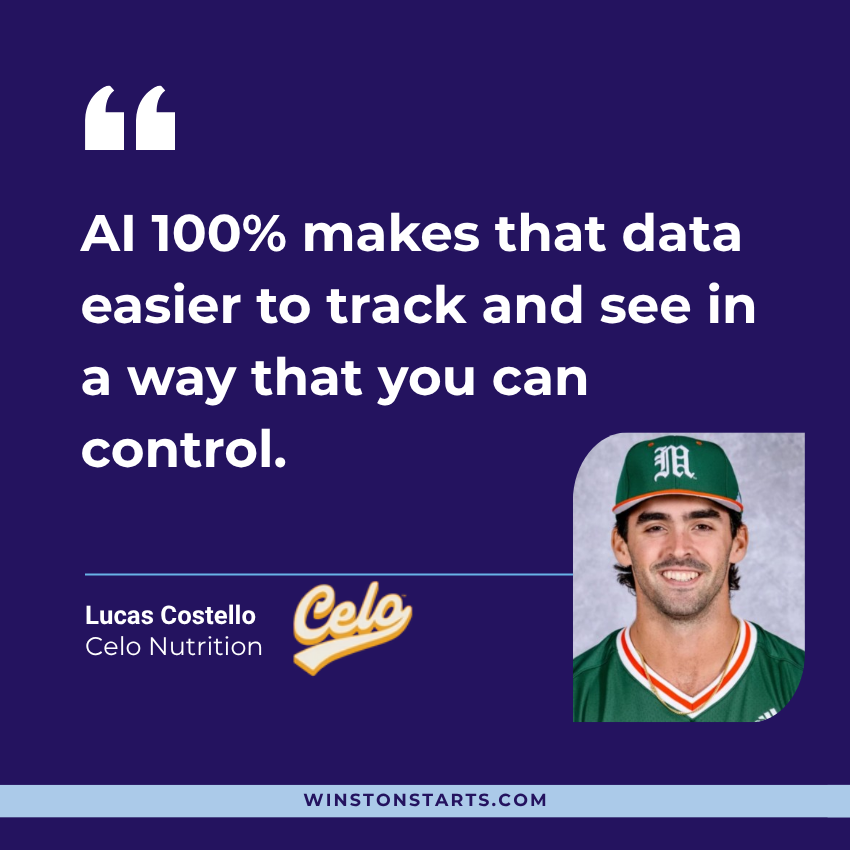
“One major problem as an entrepreneur in the CPG space is truly knowing your numbers and making decisions based on the correct data,” he explains. “AI 100% makes that data easier to track and see in a way that you can control.”
AI is helping founders like Lucas spend less time buried in spreadsheets and more time making informed moves to scale his startup.
Solvrays: Building AI Into Operations
At Solvrays, founder Bobbie Shrivastav isn’t looking at AI as just another standalone tool. She’s looking at it as infrastructure.
“Our AI stack mirrors how we think about the AI platform we’ve built for the insurance industry,” she explains. “Instead of isolated tools creating more fragmentation, we use AI as a connected operational layer across our business.”
The company uses platforms like ChatGPT, Claude, HubSpot integrations, meeting transcription tools, and custom GPTs to streamline everything from investor reporting to knowledge sharing and strategic planning.
But according to Bobbie, the real advantage isn’t the tools themselves: it’s how they work collaboratively.
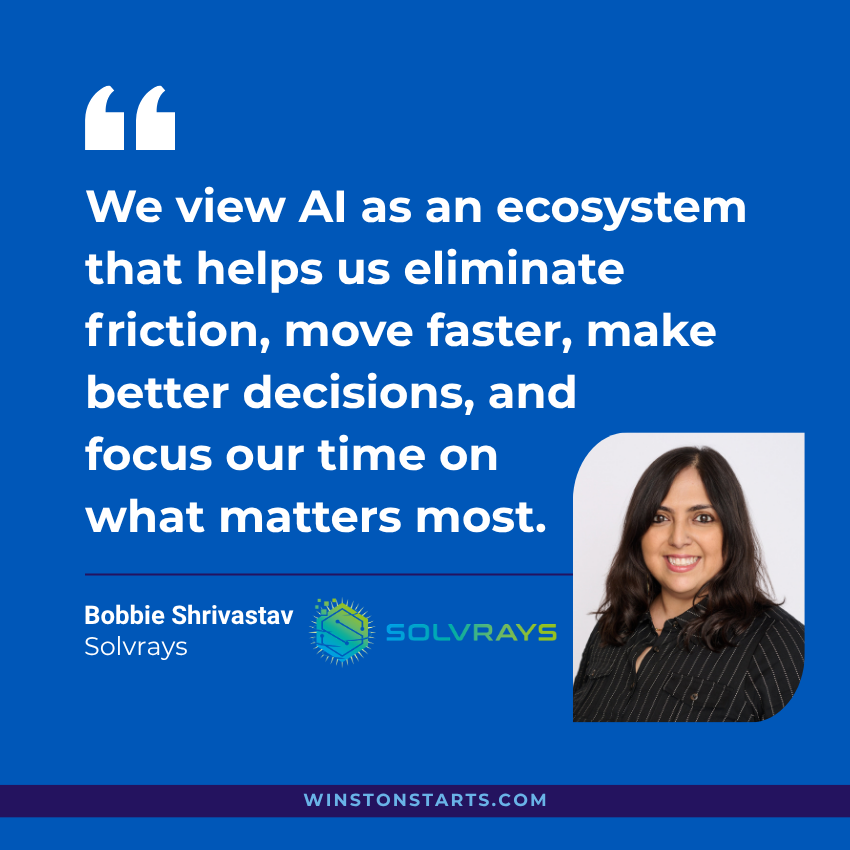
“We view AI as an ecosystem that helps us eliminate friction, move faster, make better decisions, and focus our time on what matters most: building, creating, and growing.”
She describes AI as “a force multiplier,” sitting somewhere between a software tool and a teammate. “Real business problems are rarely solved by one prompt,” she says. “The companies that win will not simply have AI…they will know how to operationalize it.”
That mindset shift is exactly what separates founders casually experimenting with AI from the companies truly building with it.
Market Drive Auto: AI as the Ultimate Speed Boost
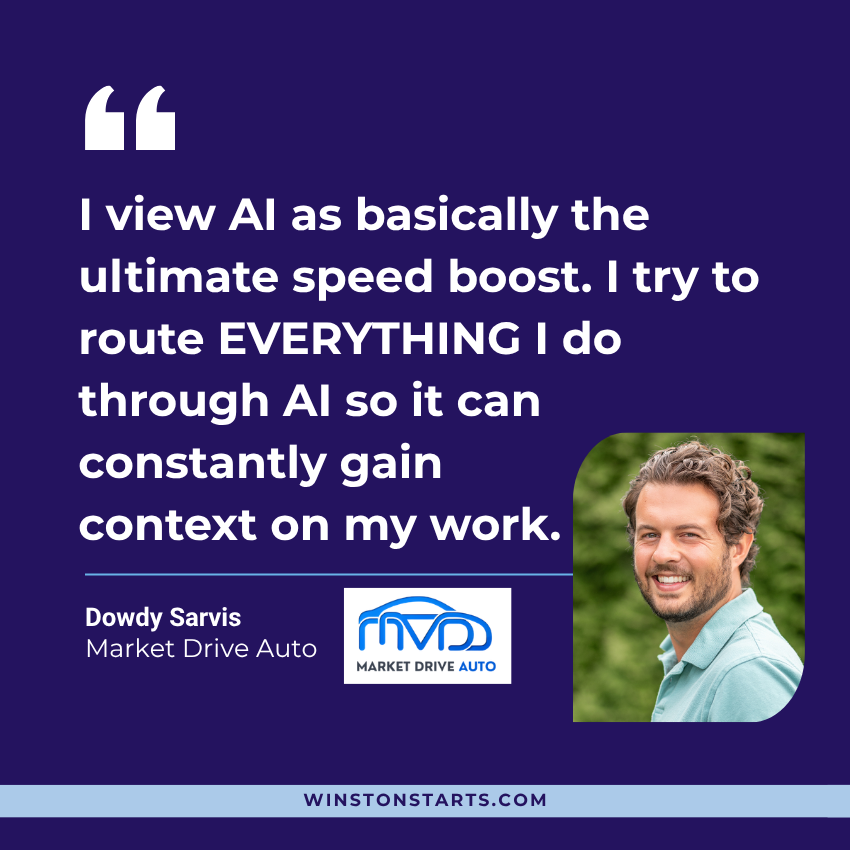
Dowdy Sarvis of Market Drive Auto, looks at AI as less of a helper and more of a constant collaborator strengthening his overall output.
“I basically do everything out of Claude Code and then build custom tooling through it for any specific needs I have,” he shares.
Dowdy sees AI as a way to eliminate bottlenecks and free up time for higher-level thinking, which is something most founders find themselves up against.
“I view AI as basically the ultimate speed boost,” he explains. “I try to route EVERYTHING I do through AI so it can constantly gain context on my work.” This can include everything from automating repetitive tasks, brainstorming ideas, and accelerating execution on things.
“The tradeoff is that sometimes it does things wrong,” he admits, “but I think that’s a tradeoff worth making 10/10 times for the increase in speed it provides.”
It’s an honest perspective because everyone knows that AI isn’t perfect, but neither is spending hours stuck in manual busywork that slows down progress.
Beam Dynamics: Scaling Faster With Fewer Resources
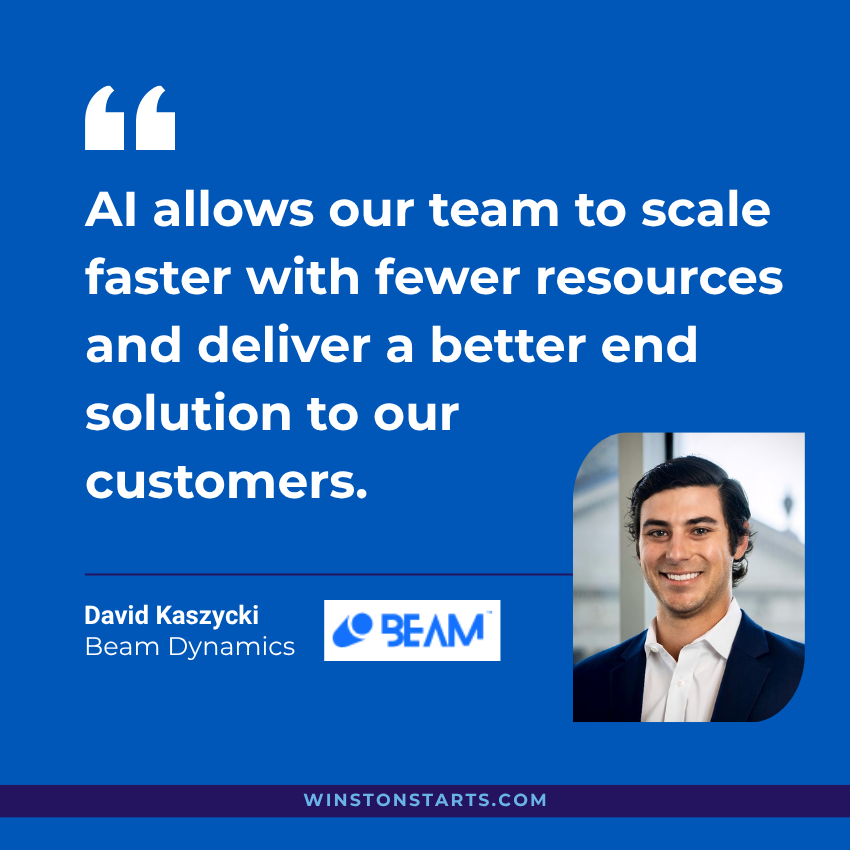
At Beam Dynamics, founder David Kaszycki and his team are using AI across nearly every stage of the business.
“From product discovery, design, development and quality assurance to customer communication, market research and marketing we’re utilizing AI tools across our entire Software Development Life Cycle (SDLC). Our key resources right now are Claude code, Claude CoWork, Google Gemini, Lido.app, and Fireflies are helping the company move faster while staying lean.”
“It’s a requirement in any SaaS company to utilize AI.” David says. “It allows our team to scale faster with fewer resources and deliver a better end solution to our customers, and as a product differentiator layered on top of our proprietary dataset.”
For startups operating in fast-moving industries, AI is quickly becoming less of a “nice-to-have” and more of a competitive necessity.
The future of entrepreneurship isn’t about replacing humans with AI, it’s about amplifying human creativity by solving real problems around efficiency and execution.
The founders inside Winston Starts are already proving that when AI is used with intention, it allows them to unleash and accelerate their innovation.